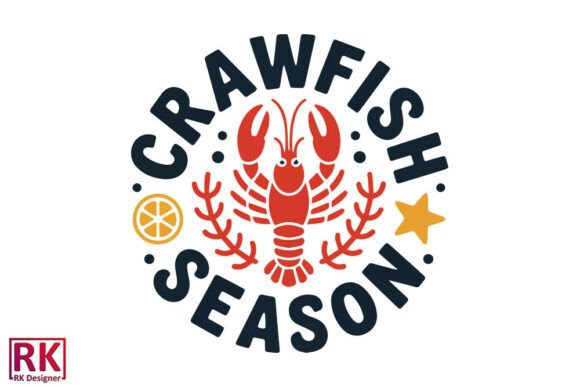
A Craft-Ready SVG for Crawfish Season Graphics
Before any design asset lands in a client project, I put it through a professional lens. This isn't about whether it's pretty; it's about whether it's purposeful. Today, I’m looking at the Crawfish Season T-shirt or Sticker Svg, considering it for a real-world application: a local seafood festival's branding and merchandise campaign. The client is a small, handmade business looking to elevate their seasonal launch.
First Impression: Rustic Charm with Commercial Potential
The initial vibe is unmistakably rustic and celebratory. It doesn’t feel corporate or overly slick; it leans into a down-home, community-focused aesthetic. This makes it a natural fit for clients in the crafts and handmade market, Etsy sellers, or businesses promoting local events, food, and culture. The visual style suggests a product line—it could anchor a themed collection of items, from apparel to packaging.
Where This Design Asset Excels in Client Projects
In practical application, this SVG shows its strengths in specific areas. For branding a seafood festival, it would serve beautifully as a hero graphic on posters, flyers, and website banners. Its decorative nature makes it ideal for product mockups: imagining it scaled large on a t-shirt design or as a central motif on a mug or tote bag instantly validates its use. As a sticker design or vinyl decal for tumblers, it creates a cohesive, campaign-ready look.
It’s also a powerful tool for building themed collections. A boutique could use it across social media graphics, Pinterest pins, and product labels to create a unified visual story for their crawfish-season offerings. For print-on-demand sellers, this is a ready-made asset for sublimation design or Cricut projects, directly translating into sellable merchandise.
The Careful Considerations: Scale, Context, and Brand Alignment
However, professional design demands scrutiny. This graphic should be used carefully in small sizes. Detailed, illustrative elements can lose definition and become muddy on small product tags or as tiny icons in crowded layouts. On complex backgrounds, it risks visual clutter. It's not suited for minimalist branding or professional corporate materials where clean visual hierarchy is paramount.
Its emotional appeal is high for a niche audience, but that's also its limit. For a generic brand or a project requiring broad, neutral recognition, it would feel off. The asset must align perfectly with the client's brand identity; forcing it into a mismatch damages visual trust and professionalism.
Practical Designer Checks Before Client Use
- Test scalability: Preview the SVG at both very large and very small sizes to ensure details hold up.
- Check contrast: Place it on light and dark backgrounds to confirm readability and impact.
- Review in monochrome: See how it performs in black and white for potential applications like stamp designs or simpler print runs.
- Mockup integration: Don't just look at the file; place it on actual product mockups—a t-shirt, a mug, a poster layout—to judge its real-world effect.
- Font pairing: Compare it with various font styles. A bold sans serif might anchor it for marketing visuals, while a script font could enhance its handmade business feel. A serif font may clash with its casual mood.
- Licensing confirmation: The most critical step: absolutely verify the commercial license terms before any client or business project proceeds. The included SVG format is perfect for editable, scalable use, but the license governs everything.
Final Judgment: A Niche Tool for Polished Campaigns
The Crawfish Season T-shirt or Sticker Svg is not a universal graphic design asset. It’s a specialized, mood-setting tool. For the right client—a craft-focused brand, a local event organizer, a digital seller targeting a specific community—it can significantly improve the visual mood and help the final result feel cohesive and polished. It supports a design direction rooted in tradition and celebration.
When used intentionally in large layout areas, as decorative accents, or as the core of a merchandise line, it boosts audience engagement through clear, resonant themes. It helps a small business branding effort feel authentic. But its success hinges on the designer’s rigorous testing and contextual application. It won't solve every project, but for that seafood festival campaign, it could be the exact element that makes the design feel complete and commercially ready.