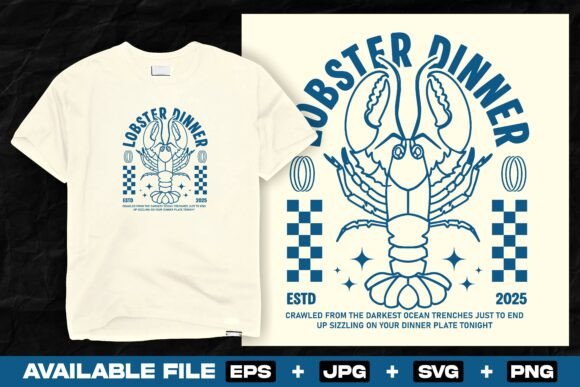
Reviewing the Retro Lobster Design for Real-World Embroidery
A Vibrant Vintage Mood Perfect for Summer Goods
The Retro Lobster Print T Shirt Design immediately strikes me as a confident, fun piece. It’s not a timid, overly detailed illustration; it’s a bold emblem. The lobster itself has a friendly, almost cartoonish personality, framed by that classic checkerboard pattern. Together, they create a mood that’s nostalgic and playful—it feels like a summer boardwalk, a family seafood shack, or a cheerful nautical gift. This visual personality is its biggest strength. In an embroidery project, this mood translates directly into a product’s appeal. A customer isn’t just buying a decorated item; they’re buying a slice of that sunny, retro vibe.
For an embroidery designer or crafter, this means the design naturally belongs to projects where that mood is key. I picture it on a bright, heavyweight cotton tote bag for a beach day, or as a central feature on a cozy, washed-cotton apron for a home cook. It would sing on a baby’s baby embroidery romper as a unique, non-generic gift. The emblem style makes it ideal for a embroidered patch, which could then be applied to a caps, a denim jacket, or a pillow cover. Its clarity ensures the theme is instantly recognizable, which is vital for small shop product listings where a quick, positive first impression drives sales.
Thinking Through the Stitch: Practical Performance on Real Products
Let’s walk through a real scenario. I’m considering this design for a custom order: a set of tea towels as a wedding gift for a couple who love coastal cooking. The Retro Lobster Print T Shirt Design seems perfect. But before I hooped the first towel, I’d think practically. The checkerboard pattern and the lobster outline will rely on clean, defined lines. On a textured fabric like a standard kitchen towel, a good, firm stabilizer is non-negotiable to prevent puckering and keep those squares sharp. The design’s open areas (like within the lobster body) suggest it uses fill stitch sections, which can be dense. For a towel that will be washed frequently, I’d want to test the stitch density on a scrap first to ensure it won’t feel overly stiff or compromise the fabric’s drape.
For custom apparel like sweatshirts or t-shirts, the same principles apply. On a dark fabric, I’d plan my thread colors carefully—maybe opting for a bright white and red combo to maximize contrast against a navy background. The “easy to modify” note in the description is promising here; I could potentially simplify the color palette for a more monochromatic, vintage look on a heather gray hoodie. On stretchy jersey fabric, my hoop technique and stabilizer choice would be extra critical to maintain the design’s shape after wear and washing.
Where This Design Requires a Careful Approach
Its boldness is an asset, but it also dictates where I’d use it cautiously. The small lettering implied in “Retro Lobster” could be a challenge. In machine embroidery design, tiny text can become a blur of thread if the hoop size is too small or the file isn’ optimized for fine detail. I wouldn’t automatically try to shrink this entire design down for a small baby clothes item like a sock; instead, I might isolate just the lobster icon. Similarly, on a curved surface like the front of a caps, the rectangular checkerboard border might need to be adapted or positioned perfectly to avoid visual distortion.
Dense stitch areas, like the fill inside the lobster, require forethought on lightweight or delicate fabrics. Embroidering this on a thin linen pillow cover could cause the fabric to buckle if the density is high. A test run is essential. For products meant as holiday embroidery gifts or personalized gifts that symbolize quality, a blurry or puckered result hurts customer trust and the handmade product presentation. The design’s strength lies in its crisp, graphic look; preserving that through proper technique is everything.
Turning a Digital File into a Desirable Finished Product
When I evaluate an embroidery file for my craft business, I’m thinking about the final product’s story. The Retro Lobster Print T Shirt Design has a built-in story. That makes it highly giftable and excellent for niche Etsy seller shops. A lobster-themed tote bag design isn’t just a bag; it’s a “summer market bag” or a “seafood festival carry-all.” This specificity boosts buyer engagement. For commercial embroidery, say for a small waterfront restaurant’s staff aprons, the design provides instant brand consistency with a professional, cheerful look.
The design’s clean layout also promises stitching clarity. When stitched well, each element will be distinct, which increases the perceived value of the item. A customer looking at an embroidered patch on a hat can easily see the craftsmanship, reinforcing the professionalism of your work. This is crucial for digital product sellers offering printable mockups; a clean design renders well in previews, giving potential buyers confidence in the digital embroidery file they’re purchasing.
A Designer’s Final Checklist Before Hooping
Before committing this design to a project, my personal checklist is straightforward. First, I always test the design on scrap fabric first, using a similar weight and texture to my final product. I check thread color contrast by mocking it up digitally in both light and dark backgrounds. I review stitch density by feeling the test sample—is it too rigid for a soft baby embroidery blanket? I confirm hoop size compatibility with my machine and the intended item size. I inspect small details in the test stitch-out, particularly any fine lines or text.
Finally, and most importantly for any creative entrepreneur, I verify the licensing. The product description mentions it’s perfect for apparel and artwork, but I need to confirm the specifics for my use. Is this design assets cleared for personal and commercial projects? Can I sell the finished product at a craft fair or in my online boutique? I never proceed without that clarity. Once confirmed, this retro lobster design becomes a versatile, mood-driven tool in my embroidery toolkit, ready to bring a smile and a vintage charm to a wide array of handmade products.